
4. Pictures of You
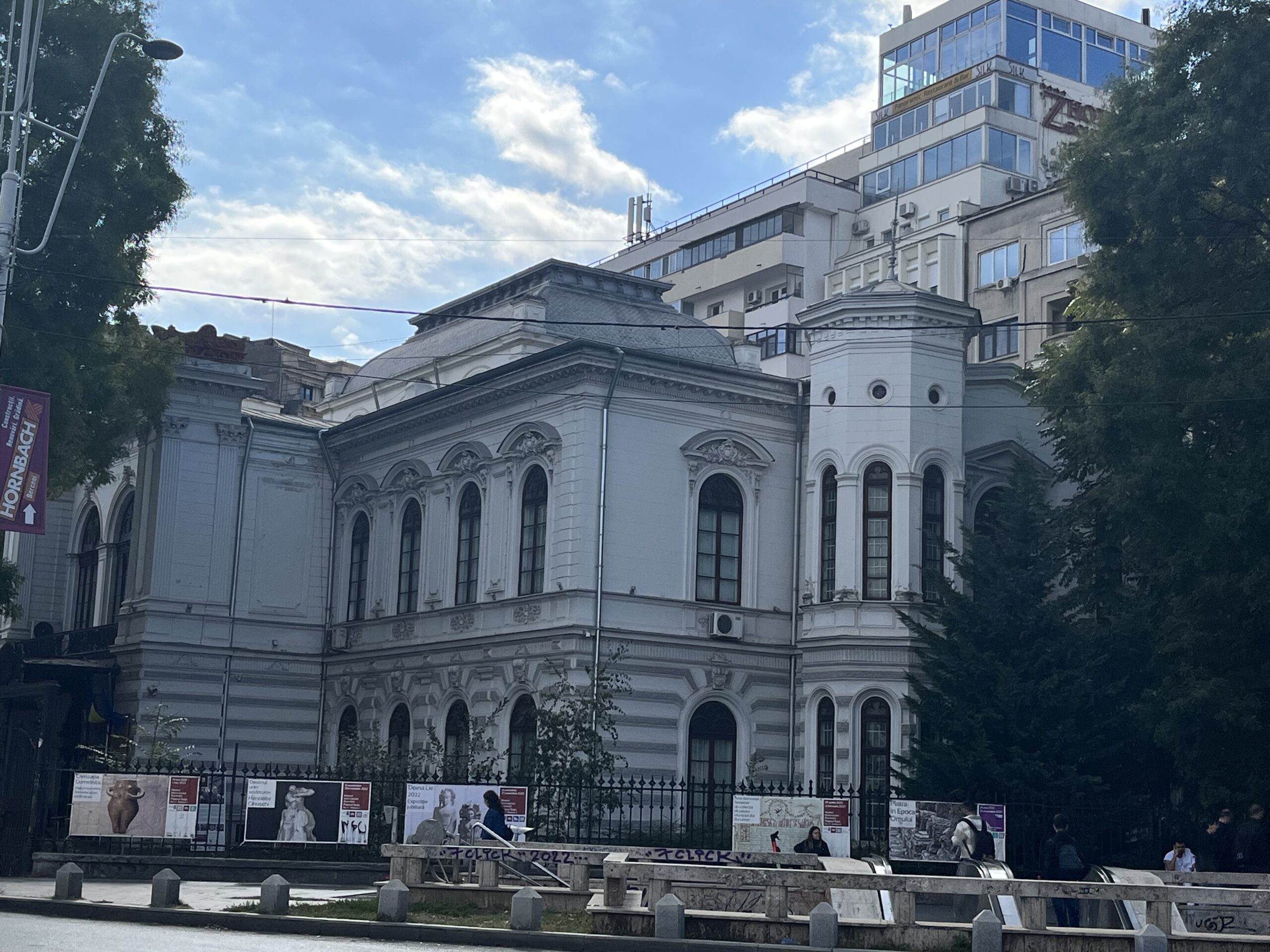
“You were stone white, so delicate / Lost in the cold / You were always so lost in the dark.” The Cure
_________________________________________________________________________________
He was leaning against the wall smoking. One leg was bent with his foot pressed against the wall, as if he wanted to make himself smaller or invisible, pushing his body into the wall. He held the cigarette like a pen, tracing imaginary words in the cold air.
“Hey, Jimmy, how is Bucharest treating you?” Bogdan, a tall man who looked like the world’s most convincing sales guy, which he mostly was, approached him.
“I’m taking it all in too quickly.”
“How’s that? Inhaling it with cigarette smoke?”
“Ha, no, I have not slept in a while, just been reading about this city of yours, wandering the streets and talking to way too many people with way too many opinions.”
“Yes, we are known to have opinions, but I have been trying to keep them to myself lately.”
A woman passed by taking big bites of a large chocolate bar and walking with even bigger steps. Jimmy thought she looked late for something. He was told that Romanians were always late, but that was not what Bogdan blurted out.
“What’s sweet is not always good for you, not for your soul or your waistline,” he commented, forgetting about not having too many opinions.
The woman stopped and took a big bite right in front of them. “Ah, I just don’t know what’s bad for me anymore. But really, you have something against chocolate? You know the saying, which actually rhymes in Romanian: ‘A peasant does not know what chocolate is, keeps the wrapping and throws away the bar.’ Enough said.”
Her confidence was intriguing. Jimmy was intrigued. “I did not know that, but I can imagine it makes more sense if it rhymed in Romanian. And did you insult us? I am Jimmy, by the way. This guy does not matter.”
Bogdan laughed and took a few steps back. Maybe it was his way of introducing Jimmy to Bucharest by striking up a conversation with a beautiful stranger.
The woman continued walking quickly, but smiled and turned her head as she passed them. “They say that Romanians are born poets. Sorry for indirectly calling you peasants. I am a professor at the university in this building. Do you go to school here, Jimmy?”
“Not really, I work across the street and I was on a cigarette break. I did not realize this was a university building.”
Jimmy glanced down at his calloused hands with a grin across his face. “And no, I’m definitely not a peasant, even though I like to get my hands dirty working on my bike. I wash them though, you know!” The woman stopped again and raised one eyebrow with a hint of amusement. “You ride a bike…so then I have to say, I’m a bit surprised to find you loitering around university buildings on cigarette breaks.”
“Hey, a guy’s gotta get his nicotine fix when he can, right?”
“An athlete? A cyclist who fixes his bike, which probably means that he rides a lot, smokes?”
Jimmy smiled. “Oh, the very rich English language where one word means two different things. I meant a motorcycle.”
“Thanks for clearing that up. I had a very different image in my head. I’m Clara, by the way.” She went inside and he just stood there awkwardly, without his cigarette, feeling somehow exposed not because he was insecure about the cigarette, but because he didn’t want her to leave.
Jimmy loved his job and he knew he could have done many things thanks to his imagination, writing skills and sense of humor. He chose a less glamorous path in advertising, which brought him to Bucharest to train the staff of a new branch. Leaving behind his last unsuccessful relationship and a mother who constantly asked her adult children for money, Jimmy did not take off to start fresh, but to see new people and places, trying to decide if there really was no place like home.
Bucharest became his first friend right away. It gave him ideas and he felt he could simply open a window if he did not want to go out. He was renting an apartment in the Old Town and an open window there was the equivalent of a “breath of fresh air” or, in city terms, “a breath of fast life and bright lights.” He started going out the day he arrived. In Bucharest, with his group from work, it meant sitting around at a restaurant and talking to people. Conversations were intense and most people certainly read a lot, which made for captivating yet often heated discussions. There was also that Latin temperament mixed with a strong Balcanic influence that kept him interested in those conversations, even when the people were the same. It was almost like a new story was being written every night, even though he was only living those stories and did not find the strength to write them down yet. Chapter by chapter, story by story, he became part of the big-city downtown life that he had never experienced before.
That day, his new coworkers took him out again. Not a well-traveled guy outside of the U.S. Jimmy was still trying to figure things out between the culture shock and his jetlag. When they got in the car to go to the North side of the town where the restaurants were apparently more posh, he noticed that all women sat in the back while one man drove and the other one sat in the passenger seat. At the restaurant, they sat him at the “men’s side of the table” and he wondered if the setup was done that way on purpose for him since women did not seem to want to speak English or if it was truly how segregated things were in this country. One of his colleagues went to the “girls’ side” and looked like he was trying to convince them to talk to him. He almost felt guilty for stressing people out because of the language barrier, but one of the girls got up and walked towards them with a long, thin cigarette in her hand, somehow not matching her tall, yet voluptuous body. She sat down next to him.
“Are you wondering if it’s normal for men and women to sit separately here?”
“Normal is an illusion. What is normal for the spider is chaos for the fly.”
The girl laughed. “Are you quoting Morticia to impress me?”
Jimmy blushed. “I wasn’t going to take credit for it. It just came to me. But yes, I noticed that in the car and then here.”
The girl looked at him a bit surprised. “Hmmm, yeah, I did not think about the car. But I saw how this table looks and I wondered. I always just assumed that we sat in the back, so we girls could talk to each other, and it never bothered me. But, yes, it’s always one man driving and one in the passenger seat. Man, the patriarchy in this country is very much alive.”
Jimmy shrugged his shoulders. “Tradition? What is your name, by the way? I’m Jimmy. I don’t remember seeing you at work, but I got introduced to way too many people today..”
“Geez, you would have remembered me. If not for anything else, for the fact that I am the only girl taller than most men there. I stand out in many ways, but, at first sight, it’s my height that people remember. I’m Andrea. I am giving you just my first name, ha, ha, ‘don’t they know you’re supposed to have a last name? It’s like they’re an entire generation of cocktail waitresses.’ Something like that.”
“They?”
“Oh, it’s from You’ve Got Mail. Maybe you never watched it.” She extended her hand to shake his and he noticed her short, yet beautifully shaped nails and a ring with a small black stone. He smiled thinking that after all those years hanging out with his sisters, he learned something: he noticed that there was no wedding band.
“We’re old school here. The girl always reaches first to shake the man’s hand.”
Jimmy shook her hand. “Yeah, right, like in a Jane Austen novel. I always wondered who should do it, but I assumed there wasn’t a special rule for this.”
“Well, in a business setting, they say to wait for your superior to make the first move when it comes to hand shaking. Are you my superior?”
Jimmy laughed. “I certainly don’t feel superior, just a dumb American who doesn’t understand the language here, nor any other language, and, as a consultant, nobody really reports to me. I am just a hippie freelancer.”
It was her turn to laugh now. She had a squeaky, contagious laugh and he was surprised by that incongruous laugh coming out of this tall, athletic girl.
“Nothing wrong with that, Jimmy. Now I have to go back to the girls and tell them what they missed.”
She pushed her chair, stood up, and moved back to the “girls’ side” of the table. He heard them laugh as she sat down next to them, with her squeaky laugh coming his way like happy waves of the Black Sea.
At that point, he was awake for so many hours that he did not even feel tired anymore, but he knew that the jet lag was going to hit him at some point, so he got up and said that he was going back to his place. He waved goodbye and, suddenly, felt sorry that he was leaving, even though all of his life he found it hard to stay and was best at leaving.
The city was waiting. He loved not hearing his steps on the asphalt. He loved the ongoing noise of the cars, which covered everything in a tempo that he was not familiar with at all. His apartment was in a tall building behind the Bucharest history museum. There was a dark alley that led to the door of the building, although every other street was inundated in light. The building door was locked, so he reached in his pocket looking for the key when he saw a young girl sitting on the sidewalk. Her face was buried in her hands and she just sat there like a statue, in her dark clothes blending in the night. He hesitated, not knowing what to do, but good-hearted Jimmy wanted to make sure she was OK and lightly tapped her on the shoulder. Her shoulder was really hard and bony, and he backed off a little, instinctively. She did not move right away and Jimmy thought that he had frightened her. He realized that speaking in English was not necessarily the right move, but not speaking at all was not an option for small-town Jimmy who truly just wanted to make sure she was not hurt.
“Hello?”
The girl took her hands off her face, but did not move her face. She put her hands on the ground and lifted herself up a few inches of the floor, in a yogic move, with all the weight on her arms, but with the head down, the way he found her. Then she lifted her head and spoke:
“Are you wondering if I am hurt? Yes, I’m hurt, but you can’t see it. In your eyes, I am well.”
Her English was impeccable. Her big blue eyes brightened the dark alley and he suddenly felt a knot in his stomach, like in school when he was taking a test.
“Wait, so you are hurt? I honestly thought maybe you were not feeling well, it’s the party area of the town, and maybe you had a few drinks. Can I help?”
The girl laughed and it sounded almost like bells; he could hear the laugh a few seconds after she stopped laughing, bouncing off the walls of the building.
“Not feeling well is an everyday feeling for me, if I may say so. I’m always in a dark alley like this but I don’t often get interrupted by a kind man like you. I thought you did not see me.”
Jimmy smiled: “I see you. Are you waiting for somebody?”
The girl stood up. She was much shorter than he thought she was, but a bit older. Maybe in her 30s and not in her 20s like he initially had thought. Her long brown hair was incredibly shiny and she was wearing a dark shirt with a small flower embroidery.
“I have been waiting for a while, but the wait is a long game for me and it’s one that I learned to accept. Are you a neighbor?”
“It’s actually my first night here, but I will be here for a while. Just trying to find my key to go to my apartment. The building door is locked.”
The girl walked to the door and pushed it. “It’s never locked for me.”
Jimmy stood there confused since he was pretty sure he tried opening it, but maybe he did not push the right way, he thought.
“Do you live here as well?”
The girl looked away. “I used to and then it all fell apart. I can tell you about it. Do you want to take a walk? I never walk with anybody but maybe it’s possible to walk with you.”
The girl was certainly strange, but her English was extraordinary and her eyes were so perfectly blue that Jimmy almost said yes. Almost.
“I have an early start and it’s my first night here. Rain check?”
The girl smiled and sat down on the sidewalk, but instead of her face-in-hands position, she looked up at Jimmy.
“Maybe tomorrow, right?” She blinked her eyes a few times only to close them and put her hands on her face again, the same way he found her.
“Yes, but I will be back earlier tomorrow, I suppose. When are you free?”
“Oh, I am free when you are. See you tomorrow, Jimmy.”
He walked inside the building still mesmerized by everything the girl was and wondering if leaving things up in the air was just the perfect ending this encounter needed. The planner in him wanted to know the time she wanted to meet, but tired, jet-lagged Jimmy continued walking. As he went up the stairs, he heard a screechy scream that was soon followed by cars honking, leaving Jimmy wondering if the girl screamed or the city.
In the morning, Jimmy got out of the building trying to find the city and the girl. The city welcomed him and within minutes he had forgotten about the girl. He headed to the subway craving another city experience and there it was, another work day with people rushing and leaving behind an intoxicating aroma of perfume, cologne and some kind of pastries or bread. He followed the smell to the subway and heard the train approaching. It turned out that he only had one station to work, yet nobody told him he could just walk. His coworkers did not even give him that option, and he wondered what kind of city people don’t like to walk. Once he got out of the subway station, the city started dancing again in front of his eyes, with cars, voices and colors that he was learning to love. The love for a city is like no other, because it transforms you with every step you take while your steps get bigger and bigger with ambitions as tall as the glass buildings. The more you walk, the more you get to enjoy the kaleidoscope of dreams reflected in thousands of windows. The small-town steps stay small and quiet; they don’t know chaos and they follow a lullaby rhythm, guiding you safely around and around until you fall asleep. City steps don’t understand silence, just as city people don’t.
Jimmy waited outside for a few minutes smoking his cigarette.
“You are in the same position I left you yesterday.”
The professor passed by smiling.
“Oh, professor, good morning to you, too! By the way, my cigarette would go well with a coffee. Where is a good place to have one?”
“There is a place right across from the university building around the corner. They serve breakfast, too. It’s a fancier place now than it was when I was a student here.”
Jimmy followed her. “Wait, you went to school here and now you teach here?”
“Yes, I guess I did not make it too far, in a way.” She raised her shoulders and smiled again.
“Listen, do you get any breaks? I would love to pick your brain about this city.”
She stopped. “It’s overwhelming, isn’t it? I can see you for lunch. European lunch, you know, we don’t eat at noon and then again at 6 p.m.”
“OK, OK, I get the sarcastic comment. How about 1 p.m. at this place that is fancier than when you were 20?”
“Oh, I am still 20!” She gave him a thumbs up and waved. He waved back and then walked to his building.
Lunch came quickly and he found her sitting at a table inside the cafe.
“So what is special about this place? You said that it’s been here a while.”
“True. The funny thing is that I went to preschool in the building next door and now I teach here across the street. This one block is literally bringing everything together in my life.”
She paused. “But yes, it used to be a bakery… We called it cofetarie. Sweets and juices, stuff that kids and students like. We also liked to smoke and they allowed indoor smoking, so we sat here for hours smoking and not consuming too much. I doubt they were making too much money. Mostly a slice of cake and some Coca Cola, in a glass bottle, you know, the good kind. I was not a coffee drinker back then. Little kids would stop by with their grandmas and they would see the smoke, and walk right out. The waitresses were really kind to us though. We skipped school to sit here and talk to friends for hours. Talk about wasted time… But again, I remember the moments and that matters now years after.”
Jimmy nodded. “You got those moments right. Counting moments is what matters.”
“What kind of moments do you remember, Jimmy?”
“My mom. She created some moments, but a different kind of moments. My mom never worked, yet she liked fine things.”
“Oh, quite a conundrum!”
“Not really. She was driven. My dad knew he had to provide and never questioned it. She knew she had to take care of the house and never complained. Of course, they barely talked to each other, so that made it easy.”
He paused as if he did not want to continue, but she pushed.
“Your English is really good,” Jimmy said, changing the topic.
“The English language is my weakness; I do everything I can to hear it and speak it.”
“Oh, damn, so that explains why you agreed to have lunch with me.”
She laughed. “It does, doesn’t it? Just to practice my English.”
“So tell me, what was life like under communism? I can’t imagine this vibrant city being any different from how it is now.”
“Let me see. I think it was still busy, but maybe I would not call it vibrant. Take the grocery stores you see today. In the ‘80s, we got only a few slices of bread per day, along with a monthly ration of ten eggs, a kilogram of oil, a kilogram of sugar, a hundred grams of butter, a kilogram of flour, and whatever meat was available. That happened, of course, if you managed to reach the front of the line before the shelves were empty again.”
“Did you wait in line yourself?”
“I did, but not by choice. Here’s how it worked. Once they saw a line, people would get in and wait. It seems really absurd now but that’s because it’s difficult to imagine the context from back then. Despite what the communist president saw when he visited stores and farmers’ markets that were always prepared for his arrival, in general, store shelves were mostly empty. People would wake up early to secure a spot in line, only to find that the wait might be for nothing. For some reason, I always seemed to end up in line more often than my sister. She tried to get out of it any way she could, most of the time pretending she felt dizzy halfway through and heading home. She was way too afraid of mom to just leave, so she first made sure to tell one of the older women, who seemed to spend their lives holding spots in line, to save her place. Inevitably, mom would send me instead. I was more of a people pleaser then than I am these days. Maybe my ex-husband has a different opinion though.”
She smiled and pushed the hair out of her face.
“So you are divorced.” The words came out of his mouth quickly.
“And I am proud of it! The short version is that I don’t believe in change. People don’t change and they should not feel obligated to change for a relationship. But I am not obligated to stay either. When we stop walking side by side, when the movement is gone, it’s my cue to move on. He lost the right to walk by my side at that moment. But it’s been a while since my divorce.”
Jimmy suddenly felt anxious. “It’s been a while since we have been here too, so I guess I have to get back before they fire me and send me back to ‘Murica.”
They walked back side by side, not hearing their hesitant footsteps on the asphalt while a nervous energy made them feel as if words were left unspoken. She looked at him while waiting at the stoplight and felt like a question was lingering in his eyes. They reached a crossroads. He stopped. The air felt cooler with that very specific scent of the city that she loved so much.
“Hey, thanks for showing me the cafe around the corner. It may just be my favorite place, but I have not seen too many yet.”
She could have said, “I could show you more” or anything else, but, instead, she waved and started walking towards the university. With every step she took, she felt like she wanted to go in a different direction and ask him why he cut their little visit short once he heard she was divorced. She knew she was going to overthink this until the next time she saw him and she wished she had his phone number.
On the other side of the road, as he was walking, Jimmy felt quite energized. He chose to walk right into the building and focus on work for a few hours. Then, he told his coworkers that he was still jet-lagged and wanted to go home. The jetlag part wasn’t a lie, but he was not so sure he wanted to go home. He wished he had Clara’s phone number, but only because she was the person he connected with the most in this short time. As if his thoughts had been yelled out loudly, the wind started blowing, and, as he stepped in the building’s hallway and pressed the button to take the elevator up, he heard a little whisper.
“Hey, up here!”
Jimmy felt a draft and looked behind him to see if somebody had come in.
“Hey, you don’t play any instruments, do you?
“Instruments?”
“You don’t have a good ear. The sound is coming from the opposite side. Look up the stairs!”
Then he did. There, perched gracefully upon the steps, was the girl from the previous night. She looked up at him with her deep, soulful eyes.
“I’ve been waiting for you,” she whispered. Jimmy felt a shiver of anticipation run down his spine as she took small steps beside him, with her long, shimmering hair cascading down her back in a rich, chestnut wave. The small flower embroidered near the hem of her pristine black shirt caught his attention again. While it seemed black before, he noticed that it was a dark crimson red.
When they reached his apartment door, the girl paused, her eyes searching his face with an intensity that made him fumble nervously for the key. “May I come in?” she asked, whispering, yet in a voice that took his breath away.
Wordlessly, Jimmy nodded. The door closed behind them with a soft click and he was pretty sure he did not see her actually go in, yet there she was. Her fingers started tracing the walls gently as she moved through the apartment.
“I’ve been here before, you know. I’ve lived here before.”
Her words hung in the air, leaving Jimmy with a growing sense of unease. There was something about her presence, the way she seemed to know this place, that unsettled him. He watched her carefully, waiting for her to tell him more and shed some light on the mystery that surrounded her.
He sat down on the couch. “Is this your apartment? I rented it through an agency, so I don’t know the owner.” She sat next to him and turned to face him, her eyes shining while her voice carried a soothing, lullaby-like sound as she spoke.”You know, there used to be another building here,” she began. “I lived here a long time ago. It was such a vibrant place, full of actors, singers, and all sorts of famous people.”
He saw a melancholic smile on her lips as she spoke. “But then…” Her expression shifted and her almost transparent face got a shadow of sadness that made her even more beautiful, with her very delicate features frightening him a little. “It all came crashing down. The building collapsed in an earthquake.”
Jimmy felt a chill run down his spine at her words. He was not sure whether she had witnessed that earthquake firsthand, but it seemed so. He opened his mouth to ask for more details, but the girl covered it with her hand.
“I lost everything that day,” she murmured, her voice barely above a whisper. “My home, my life…” With her eyes, she looked at him as if she was seeing him for the last time.
Jimmy sat in silence. He looked into her eyes, suddenly wondering what “I lost my life” was meant metaphorically or…. She grabbed his hand and as he felt the first tremors rumbling through the room, the girl’s hand grew colder in his. As the shaking intensified, he realized with a sinking feeling that this was no ordinary earthquake, but the same one that had claimed the girl’s life almost a half a century ago. And as the building shuddered around them, Jimmy understood. He closed his eyes, but held her hand tightly.
When Jimmy opened his eyes again, he found himself alone on his couch. Disoriented, he looked around, realizing he must have fallen asleep. His head rested on his coat, and he was curled up, clutching a pillow in the fetal position. The morning light coming in from the boulevard outside suddenly put a smile on Jimmy’s face. “It wasn’t a dream,” he said to himself. “I made a ghost friend.”
Sitting up, Jimmy felt a strange mix of emotions: a lingering sadness for the girl’s tragic fate, but he was also somehow thankful that she chose him to share the story. Getting ready to start the day, he held onto the memory of her touch and the chill of her hand holding his, as proof that her story felt real to him, as real as the city did.
He pulled out his phone and saw three missed calls from his sister Beth. He didn’t call back. He already knew what she wanted, the same thing that his mom wanted, the same thing they always wanted: money or someone to listen to their stories, always similar and always shared with too many people. His mother had trained all of them well, though his sisters never quite caught on to the game. She’d pull you close with a manufactured crisis: the heating bill, the car repair, the medical test that insurance wouldn’t cover, and then push you away with criticism once you helped. “Beth gave more.” “Your brother-in-law fixed it better.” “If your father were still alive, I wouldn’t have to ask.”
Jimmy’s father had died when he was nineteen, and his mother had been dying dramatically ever since, though she remained in excellent health. His sisters, dutiful and guilt-ridden, circled her like moons around a planet, their orbits growing tighter each year. They sent money. They visited every holiday. They absorbed her complaints like sponges soaking up toxic water.
Jimmy had a different strategy: he left; first across town, then across the state, then across the country, and now across the ocean. Each move brought him freedom from the phone calls and the guilt along with the endless need that could never be satisfied.
“You’re here, but you’re already planning your escape,” his sister said during their last fight. “I can see it in your eyes. You’re just waiting for the right moment to disappear.”
She wasn’t wrong. He’d tried to explain it once to Beth: “I’m not running away, I’m running toward.” But toward what?
The ghost girl couldn’t leave. She’d been trapped for almost 50 years in the rubble of her old life, unable to escape. Maybe that’s why he couldn’t stop thinking about her; she was the opposite of everyone he’d ever known, the opposite of himself. She didn’t want anything from him except to be remembered, to have her story heard.
That was something he could give. That was something that didn’t require staying.
Getting ready to start the day, he held onto the memory of her touch and the chill of her hand holding his, as proof that her story felt real to him, as real as the city did.
Bucharest morning smelled like coffee, perfume and words. People had loud thoughts and opinions, so many opinions that Jimmy tried to understand and respect, feeling the weight of countless voices that brought a certain smell in the air, both fascinating and overwhelming him. And then came the text. “I look at your name and your number and in these simple numbers and letters, I see you. Don’t attempt to reply. You can’t. My non-existence makes this a one-way conversation, but aren’t there many relationships like that?”
Jimmy sank onto the bench outside his office building, reading the message one more time. The text resembled a letter that had materialized silently on his phone, with typewriter-like font. There was no signature, but he did not need one. In a city where a million women lived, he managed to find the one who defied the boundaries of existence. Her words lingered in his mind, a haunting reminder of a quiet story unfolding in a vibrant city, yet without the sound and smell of human words this time.
That night, he couldn’t sleep. He sat at his laptop in the apartment’s small kitchen as he typed “Bucharest earthquake 1977” into the search bar. The articles came up immediately: March 4, 1977. 9:21 PM. Magnitude 7.4, the deadliest earthquake in Romania’s recorded history. 1,578 dead and more than 11,000 injured, with 90% of the deaths being right there, in Bucharest.
He clicked through page after page. But it was the photographs that made it real, those grainy black and white images of buildings reduced to rubble, rescue workers digging through collapsed floors, and survivors standing in the street with blankets wrapped around their shoulders. The worst damage had been in Bucharest’s city center. Jimmy zoomed in on a map, his stomach tightening as he recognized street names and buildings: the University. the History Museum and his own boulevard.
He found a list of destroyed buildings with one article mentioning “a residential building near the University, home to many of Bucharest’s artistic community: actors, singers, writers.” He clicked on survivor testimonies, reading accounts from people who’d felt the tremors start, who’d run for doorways or tables, who’d made it out while their neighbors didn’t. One woman described hearing singing from beneath the rubble, someone trapped, keeping themselves calm with music, the voice growing quieter over hours until it stopped.
He searched for names, for a girl with blue eyes and for any mention of the building’s residents who were more or less famous. The articles listed some of the prominent deaths: actors and singers, but there were hundreds of others, ordinary people whose names appeared only in statistical reports. Maybe she’d been one of them. Maybe she’d been twenty-five or thirty, wearing her dark shirt with the small flower embroidered near the hem, sitting in her apartment when the world started shaking. Maybe she’d run for the doorway, or maybe she’d frozen. Maybe she’d been crushed instantly when the building pancaked, and her spirit had been there ever since, waiting in that dark alley, sitting on those stairs, haunting the space where her home used to be. He closed his laptop.
For the next few days, Jimmy hurried home every evening, waiting for the girl. As the days went by, with every flutter he felt in his stomach, he felt less inclined to socialize. He continued to research the earthquake, reading everything he could find. There was nothing about the girl there or maybe he couldn’t piece the information together. He waited for a text or for a sign. When the apartment intercom buzzed that evening, he rushed as if he knew who it was. He did not. “Hey, Jimmy, it’s your buddy from work, Bogdan.”
Bogdan was very tall and very enthusiastic. He knew everybody and wanted to know even more people.
“I came to get you out of the house. The girls at work are asking about you.”
Jimmy blushed. “Where are those girls now? Are they going out with us?”
“If you want, but I have some friends at a pub nearby so since I passed your place, I wanted to stop by and get you. We can invite the girls, too. Which one do you like more?”
Jimmy did not want to invite any girls. They went to a pub. Bogdan introduced him to five people whose names Jimmy immediately forgot. Someone bought him a beer. Someone else asked about America. He answered mechanically, his mind still in that apartment, waiting for blue eyes and typewriter-font messages that never came.
“You’re distracted,” Bogdan said, leaning in. “Girl trouble already?”
“Something like that.”
“The professor? Clara? You should ask her out.”
Jimmy nodded but wasn’t listening. He pulled out his phone, reading again the ghost’s message: “My non-existence makes this a one-way conversation, but aren’t there many relationships like that?”
His whole life had been one-way. He ghosted everybody before they could ghost him first. But this ghost couldn’t leave. She was trapped, choosing him to hear her story.
“It’s really stuffy here. I need air,” Jimmy said, standing abruptly and heading outside.
The city hummed around him: cars, voices, and life moving forward while he stood still, waiting for someone who’d been dead for fifty years.
“Escaping already?”
He turned. Clara was walking past, almost as if he had called her. They stood there in the cold, breath visible between them.
“Just getting some air, but I’ll probably walk home. I think I have had enough. Which way are you heading?”
“Back to the University subway station. I went out with a few professors.”
“Let’s walk,” he said. “That’s right next to my building.”
They took just a few steps and he blurted:
“Do you want to get dinner sometime?” he asked. “Real dinner. Not just lunch between work.”
Clara studied him. “Are you asking because you’re lonely in a new city, or because you actually want to know me?”
It was the kind of direct question that should have made him run. It was way too much and too intense way too soon.
“Both,” he admitted. “Is that honest enough?”
“It’s honest.” She paused. “Yes. Friday.”
“Friday,” he agreed.
They came closer to the subway station and he pointed to his building. “I live here.” She lifted her eyebrows.
“My aunt lived in that building, you know, before it collapsed during the earthquake.”
Jimmy’s stomach dropped. “What?”
“She did. She was not famous though. She lived there with her sister. Her sister went somewhere else that night and their brother came to visit. They both died. Beautiful woman. My mother says she still visits sometimes. Says she can feel her there, waiting,” Clara added.
Jimmy couldn’t breathe. “What was her name? Do you have a picture?”
“Elena. I have one saved on my phone.”
Clara started scrolling while Jimmy waited, his heart pounding. “Here she is,” Clara said, turning the screen toward him.
Jimmy stared at the photograph. Black and white, slightly blurred at the edges; a woman in her late twenties was sitting on stone steps, looking directly into the camera with eyes that seemed to see through time. Her dark hair caught the light. She wore a simple blouse, smiling softly at whoever held the camera.
It was her. Those same eyes. The girl in the alley. “I lost everything that day. My home, my life.”
“I think I’ve seen her,” Jimmy said quietly.
Clara did not look surprised. “Then you’re very lucky. Or very cursed. I’m not sure which.” She pulled her coat tighter. “By the way, my ex-husband was haunted too. Not by ghosts, but by his past. His first love, his teenage years, all the things he threw away. I spent years competing with memories.” She looked at Jimmy directly. “Don’t stand me up for a ghost, Jimmy. I’ve already lived that story once.”
She walked away, leaving him standing in the cold.
That night, Jimmy sat on his couch in the dark, waiting. The apartment was silent except for the boulevard noise filtering through the windows. He kept the phone in his hand, hoping for another typewriter-font message.
Around midnight, he felt that familiar chill, the air pressure changing. She was sitting in the chair across from him, hands in her lap, blue eyes luminous in the darkness.
“Elena,” he said.
She tilted her head. “You know my name now.”
“Clara told me. She’s your niece.”
“Little Clara. I used to take her to the park and buy her ice cream. She probably doesn’t remember.”
“She does. She remembers you.”
Elena stood, moving to the window. “I’ve been waiting so long. Not for rescue, I know there’s no rescue. Just to be remembered. To have someone know I was here, that I mattered.” She turned back to him. “You’ve been kind to me. But you can’t stay here forever, Jimmy, waiting with the dead.”
“I’m good at leaving,” he said. “Staying is hard.”
“Then learn.” Elena’s form was already fading, becoming translucent in the dim light.
“Wait!”
But she was gone. What was left was the sound of the city and the empty apartment while Jimmy found himself alone.
Friday came. Jimmy waited for Clara outside the subway station. He thought about Elena trapped in that building for almost five decades. Then he thought about Clara trapped in a marriage to a man who loved his ghosts more than her. He thought about his own mother, still demanding, even though still convinced that everyone would eventually leave. He pushed his feet into the sidewalk, grounding himself.
Clara looked up as she came out of the subway station. Their eyes met.
“I’m here,” he said.